In this guide
Use each document for the question it answers. A year-end wage form is not simply the final paycheck printed in a different layout.
Begin with document purpose
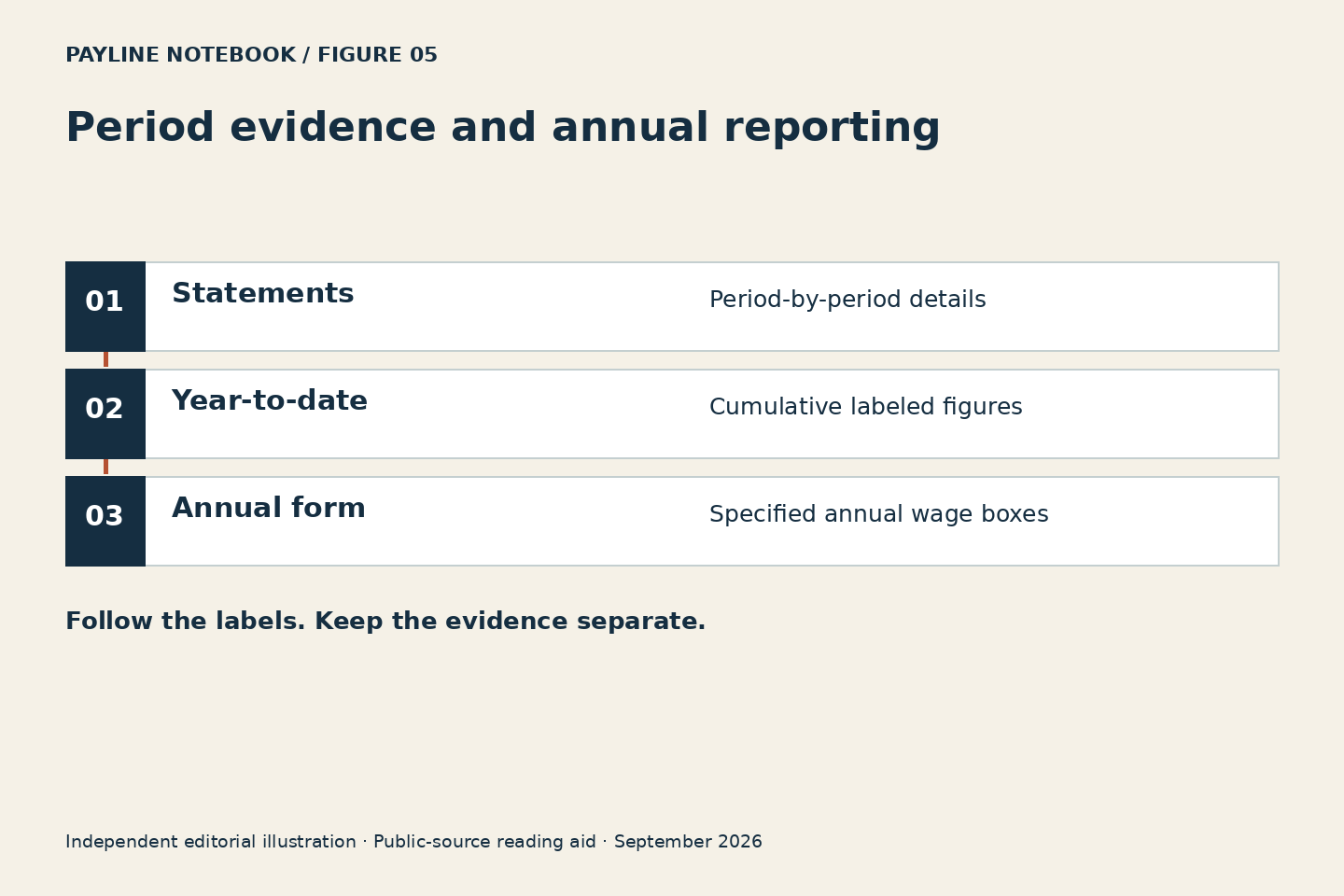
A pay statement describes a payment and its associated earnings and deductions. Form W-2 reports specified annual wage and tax information. Different boxes and subtotals can reflect different definitions. Do not assume the final statement’s largest year-to-date figure must equal every wage box on the W-2. A mismatch should lead to a question about definitions before a conclusion about error.
Confirm year and issuer
Check the tax year and employer information on the form. If your work history involved more than one employing entity or a transition, ask which issuers you should expect rather than assuming one brand means one annual form. This publication does not know your legal employer or tax history. Keep each form intact and avoid combining figures without understanding their scope.
Build a comparison with labels
Put the final statement and annual form side by side privately. Compare only figures that the employer or applicable instructions say are comparable. Note the exact box or line, amount and reason for uncertainty. A comparison that lists “Box number versus statement label” is more actionable than one saying “my taxes are wrong.” Do not send the full records in an ordinary public forum.
If a form is missing or incorrect
The IRS provides a specific official resource for missing or incorrect W-2 forms. Its instructions and dates relate to the applicable filing year. Read the current page instead of applying a date copied from this article. Start with the employer or payer as directed, then follow the applicable official process if the problem remains unresolved.
Keep corrections distinguishable
If you receive a corrected form, retain a clear version record so that you do not accidentally use the superseded copy. Do not overwrite the original without an authorized recordkeeping plan. A corrected document can affect a return already prepared or filed; seek the current IRS instructions or qualified advice rather than assuming no further action is needed.
Prepare next year’s retrieval
Keep a private note of where official annual documents are obtained and which contact handles access problems. Do not store passwords beside tax files. Before a work transition, ask how future documents will be delivered through authorized channels. The useful habit is preserving access to the right issuer and year, not collecting every workplace file you can download.
Turn a mismatch into a defined question
Imagine the final pay statement has a gross-earnings total of $60,000 while a wage box on an annual form shows $57,000. Do not label the $3,000 difference an error or invent its tax explanation. Identify the exact statement label and W-2 box, then ask whether those definitions should match and what documented items explain the difference. Keep other wage boxes separate. This example is not a tax calculation; it demonstrates why the labels matter more than the visual similarity of two annual-looking numbers.
Continue with Year-to-Date Columns: Read the Scope Before Adding Anything, or Reimbursement and Earnings: Similar Deposits, Different Questions.